
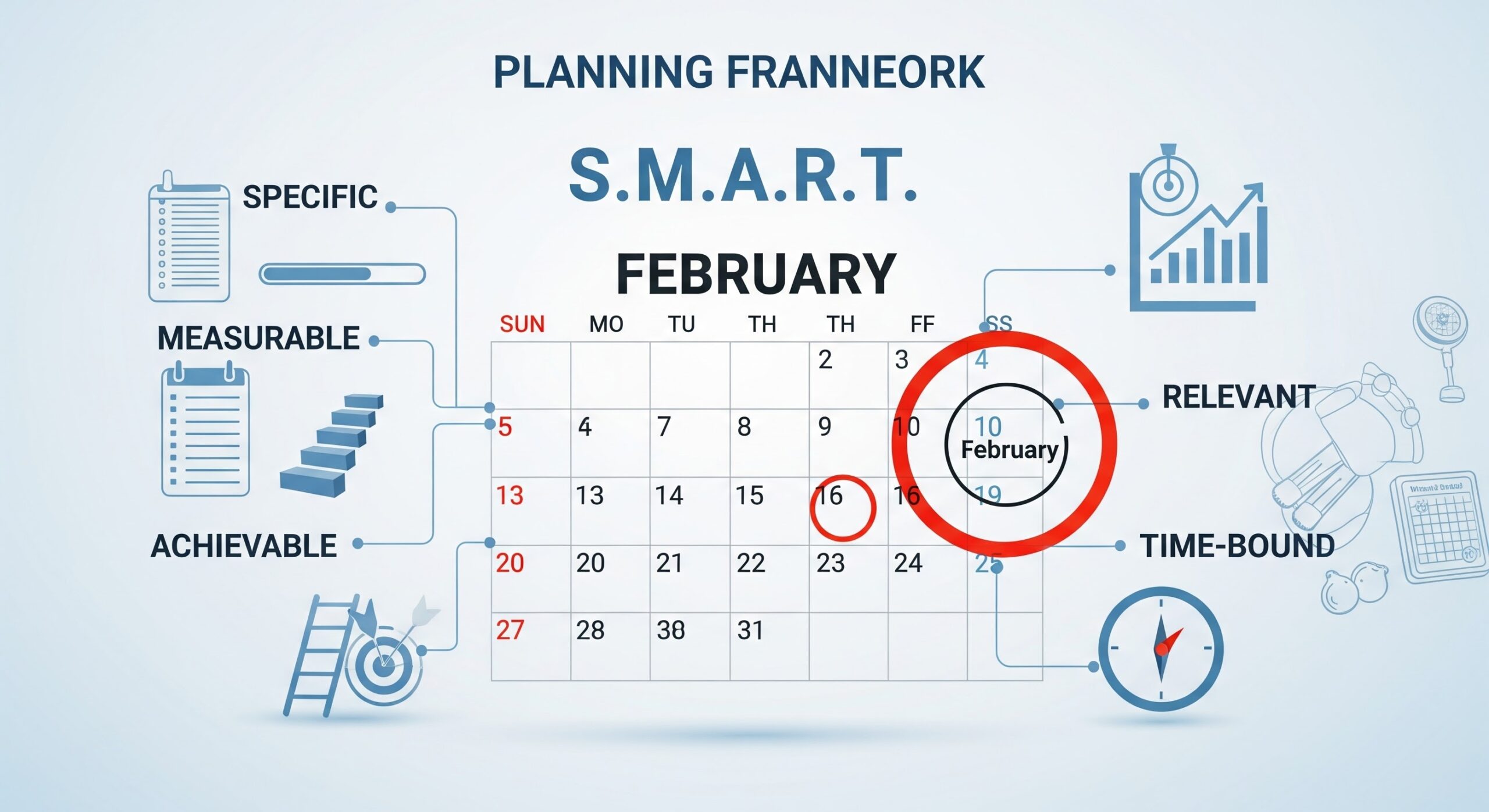
It’s a statistic that haunts the beginning of every year: According to a sobering study by two American professors, J. C. Norcross and D. J. Vangarelli of the Department of Psychology at the University of Scranton, Pennsylvania, a massive 92% of people fail to achieve their New Year’s goals by February. This isn’t a failure of willpower; it’s a failure of planning. Most individuals make grand, “lofty” resolutions without bothering to establish a concrete, actionable roadmap to success.
This year, let’s break that cycle. Let’s make 2026 the year we belong to the successful 8%.
The Essential Tool: The SMART Framework
To ensure our 2026 resolutions survive past the first month, we must ditch vague aspirations and embrace the universally recognized SMART planning framework. I trust you are familiar with its components, but for the sake of thoroughness, here is what it stands for:
- Specific: Clearly define what you want to achieve.
- Measurable: Establish concrete criteria for measuring progress.
- Achievable: Set realistic goals you can actually accomplish.
- Relevant: Ensure the goal aligns with your broader life/career objectives.
- Time-bound: Give the goal a realistic deadline.
A SMART plan transforms a wish into a task list, ensuring we don’t forget or abandon our commitments by next month.
My 2026 Technology and Career Development Plan
To provide a concrete example of the SMART methodology in action, here are some of the actual plans I’ve set for myself for 2026. Feel free to adapt them to your own career trajectory.
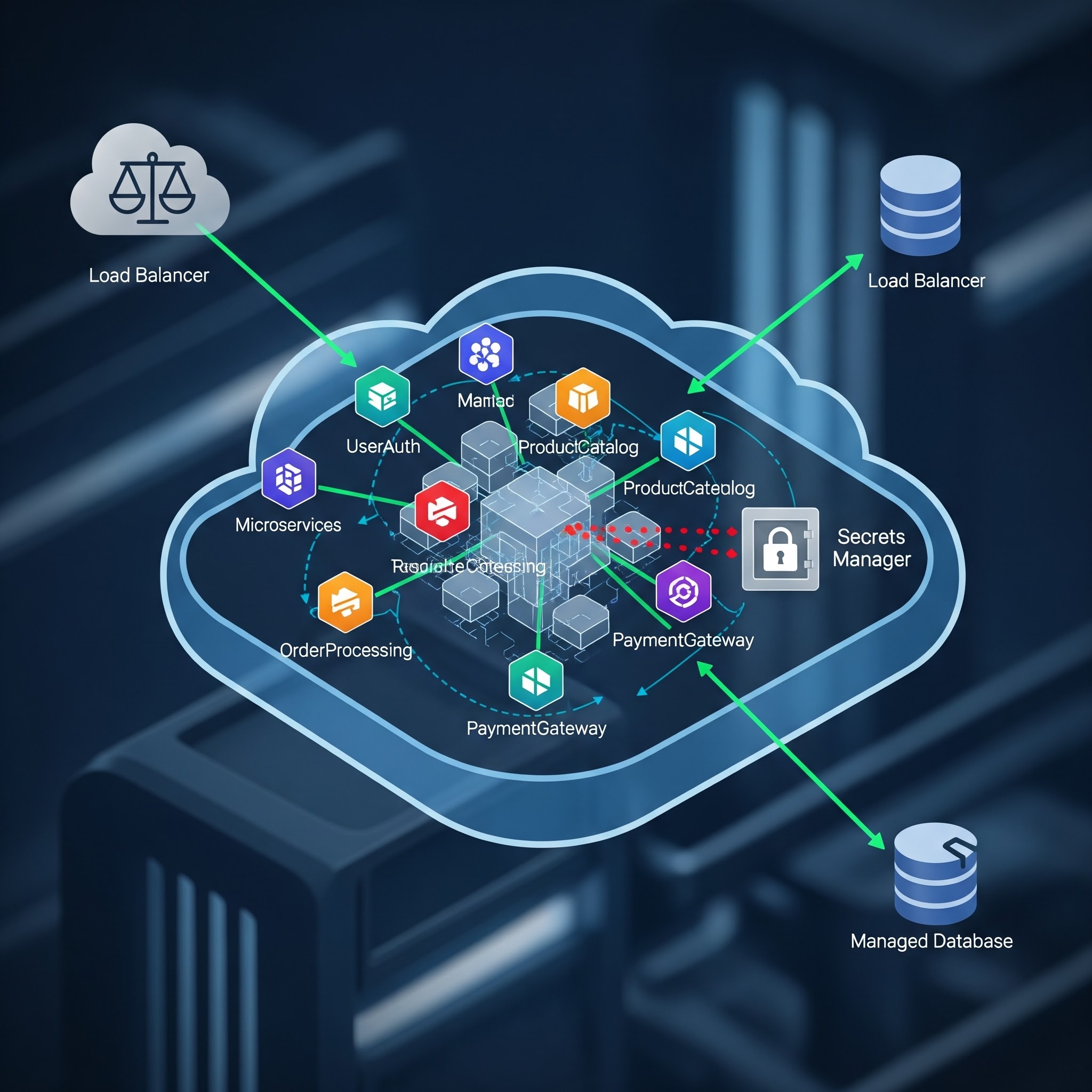
1. Q1 Focus: Kubernetes Production Deployment Mastery
Goal: Complete and deploy a robust, production-grade Kubernetes setup for a microservice-based application within the first quarter (Q1) of 2026.
Specific Action Plan (The How):
- Platform Implementation: The entire deployment will be executed on a major cloud platform (e.g., AWS EKS, GCP GKE, or Azure AKS).
- Security & Compliance: Implement comprehensive security measures, including secured and encrypted handling of secret data (using tools like HashiCorp Vault or Kubernetes Secrets with encryption at rest).
- Resilience & Uptime: Develop a detailed, tested Disaster Recovery (DR) plan, including backup and restore procedures for persistent volumes and configuration data.
- Automation: Establish a fully Git-based Continuous Integration/Continuous Deployment (CI/CD) pipeline (e.g., using ArgoCD/Flux and Jenkins/GitLab CI) to ensure code changes are automatically and safely deployed.
- Performance: Optimize containerization processes, focusing on reducing image size, improving startup times, and ensuring resource limits are correctly set for efficient cluster utilization.
- Innovation: Integrate the responsible use of AI tools (e.g., GitHub Copilot, or AI-driven monitoring) for code review assistance, troubleshooting, and intelligent logging analysis.
- Knowledge Transfer: Create well-structured, comprehensive documentation covering the architecture, operational runbooks, and troubleshooting guides for the new setup.
2. Q2 Focus: Go Lang Proficiency and Application Development
Goal: Achieve functional proficiency in the Go (Golang) programming language in the second quarter (Q2) of 2026, transitioning from theory to practical application development.
Specific Action Plan (The How):
- Formal Learning: Successfully complete a minimum of two structured, comprehensive courses focusing on Go syntax, concurrency, and best practices.
- Practical Application: Develop a Proof-of-Concept (POC) application using Go Lang, demonstrating core language features and its suitability for backend services.
- Architectural Deep Dive: Build a high-performance REST API service in Go, specifically mirroring the architecture of one of the core microservices I currently maintain or have architected in another language. This provides a direct performance and maintainability comparison.
3. Q2 to Q4 Focus: Professional Mentorship and Growth
Goal: Mentor and actively guide the career development of two aspiring technical professionals (dudes) from Q2 through Q4 of 2026, fostering practical, job-ready skills.

Specific Action Plan (The How):
- Core Fundamentals: Provide structured mentoring sessions focusing on DevOps basics, including version control, infrastructure as code concepts, and automation principles.
- OS Expertise: Deepen their knowledge of Linux basics, command-line usage, scripting, and system administration essentials.
- Real-World Deployment: Guide them through the process of deploying a web application from scratch onto a dedicated Linux Virtual Machine (VM), covering networking and security.
- Cloud Automation: Collaborate with them to build a working CI/CD pipeline tailored for a specific cloud platform, giving them hands-on experience with production-style workflows.
Your Call to Action
My examples are centered on technology, but the SMART principle applies universally—from fitness to finance. Now it’s your turn.
You must follow this format: define your goal clearly, and then list the specific, measurable steps that will get you there. Do not allow your resolution to be vague.
Add your own goal and plan following these rigorous examples. Cheers!
Leave a Reply